Buildwas Abbey in Shropshire has the unfair advantage of looking completely innocent.
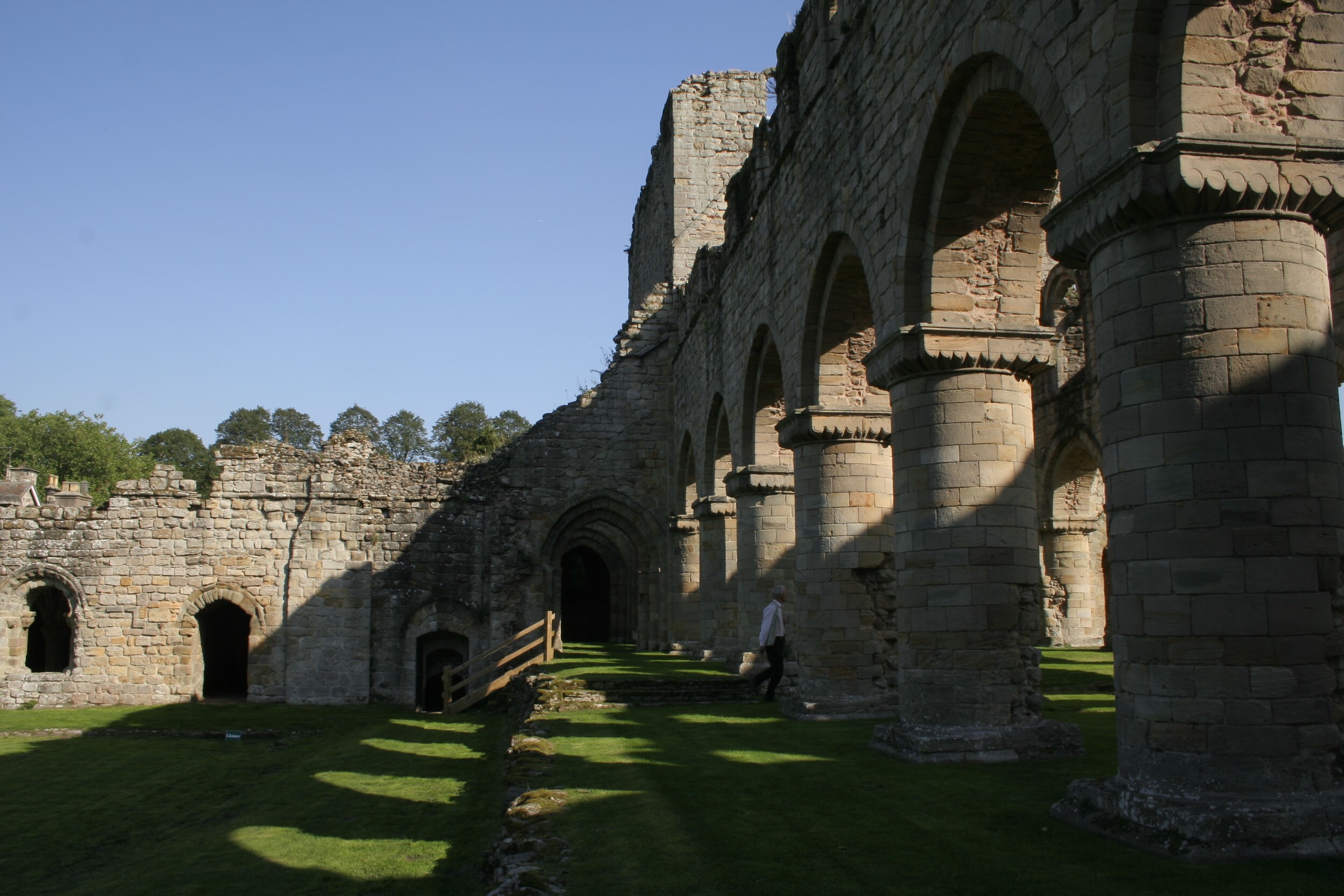
Pale stone. Open arches. Grass where the roof and routine used to be. The River Severn nearby doing its gentle scenery thing. It is the sort of ruined abbey that looks ready to be called “peaceful” by someone carrying a flask.
Which is a problem, because in 1342 the was murdered.
One of the was suspected.
And suddenly all that quiet loveliness starts behaving very differently.

The calm is doing too much
Buildwas was a Cistercian abbey, and that matters because Cistercian houses were not usually built to show off. They liked plainness, discipline, order, work and prayer. Even as a ruin, Buildwas still has that stripped-back severity. It does not flutter around trying to be pretty. It stands there looking calm, organised and faintly disappointed in you.
That is exactly why the murder story works.
Violence in a castle feels grim, but not surprising. Castles come with the furniture of threat already built in: walls, gates, guards, grudges. Violence inside a religious house is stranger. The architecture says obedience. The story says something inside the obedience snapped.
A community had to keep praying afterwards
The suspected monk was Thomas of Tonge. He was imprisoned at the abbey and then escaped, which is one of those details that makes the whole thing feel less like a tidy medieval fact and more like a contamination of daily life.
Imagine trying to carry on afterwards. Bells. Offices. Meals. Silence. The . The . The same rules, the same walls, the same faces, but now with a dead abbot and a suspected killer somewhere inside the memory of the house.
This is why I like monastic ruins when they misbehave. We are so tempted to make them clean: holy men, quiet prayer, soft light, a conveniently spiritual atmosphere. But monasteries were full of people, and people do not stop being complicated because they are wearing habits. They bring ambition, resentment, fear, loyalty, boredom, politics and bad decisions with them.
Buildwas is good because it lets both things be true. The place was religious. The place was also messy.
And then it got worse
The murder was not the abbey’s only problem. A few years later, in 1350, Welsh raiders attacked Buildwas, stole treasure and imprisoned the community. So the ruin that now looks like a quiet Shropshire stop had, within a fairly short span, murder, suspicion, escape, debt, internal division and outside violence.
That is a lot for somewhere that currently looks like it might be nice for a picnic.
The more you know, the less “peaceful” the abbey becomes. It is still quiet, yes. But quiet is not the same thing as innocent. Sometimes quiet just means the bad part has finished making noise.
The ruin stopped looking guilty
The plainness is part of the trick. Buildwas does not look theatrical or cursed; it looks measured, pale and calm, which is exactly why the murder story lands so sharply. Put the roof back in your head for a second: enclosed rooms, routine, bells, obedience, all the daily machinery of a religious house.
The murder is not unsettling because the ruin looks dark.
It is unsettling because it does not.
The grass is soft. The river is near. The stone is calm. The place has stopped looking guilty, but the story has not.
Enjoyed this one?
Get the next story straight to your inbox. No filler, no spam — just the next place worth writing about.
No spam. Unsubscribe any time.
Sources+
- English Heritage: History of Buildwas Abbeyenglish-heritage.org.uk
- British History Online: Abbey of Buildwasbritish-history.ac.uk
- Wikipedia: Buildwas Abbeyen.wikipedia.org
- Image credits: Article images are credited to Wikimedia Commons where used and are under Creative Commons licences / public domain unless otherwise stated.
More articles
Swipe →