
A church door knocker does not usually get to be the hero of a life-or-death story, which is probably why the medieval feels so wonderfully overqualified for the job.
It was door furniture, yes, but in certain churches and cathedrals it was also a threshold object with teeth. A hand could reach for it in panic. A ring could be struck against the wood. A person accused of a crime could arrive breathless at the church door and, if sanctuary was recognised there, suddenly the rules around them changed.
That is the bit that makes the whole thing so good. The sanctuary knocker was not magic, and it did not make anyone innocent. It created a pause. In a world where local justice could be fast, violent and extremely final, a pause was not a small thing. It could mean confession instead of lynching, process instead of mob justice, exile instead of execution, or at the very least enough time for the church to get involved before everyone else got carried away.
If you have ever searched “what is a sanctuary knocker?” or “could churches really offer sanctuary?”, the short answer is yes, but not in the cosy way people sometimes imagine. Medieval sanctuary was less like a free pass and more like a holy interruption: a temporary refuge where law, fear, guilt, religion and architecture all met at the door.
What was a sanctuary knocker?
A sanctuary knocker was an ornamental ring or knocker on a church or cathedral door, associated with the medieval right of . The idea was simple enough to be terrifyingly dramatic: reach the church, touch the ring, make your claim, and the holy place could offer you protection from immediate arrest, revenge or execution.
That protection came from the wider custom of church sanctuary, where a sacred place could act as a recognised refuge. The fugitive was not declared innocent, and nobody handed them a fresh cloak and a new identity at the font. Sanctuary was a legal and religious holding space, not a medieval escape-room prize. Still, if you were being pursued, a holding space could look very much like salvation.
The knocker mattered because it made the moment visible. A person did not merely approach an abstract concept called asylum. They reached a door. They seized a ring. They crossed into a space that claimed a different kind of authority. That is excellent history because it turns law into an object and panic into a gesture.
The door as a border
Medieval churches were full of thresholds: porch to , nave to choir, choir to altar, ordinary ground to consecrated ground. Doors were never just useful holes in walls. They were places where status, ritual and behaviour changed.
The sanctuary knocker sits beautifully in that world. It marks the line between outside danger and inside protection, between secular pursuit and sacred interference. From the street, the ring could look like a final chance. From the church’s side, it was a reminder that holy space was not merely symbolic. It had social force.
This is why the object is so easy to romanticise, but also why it needs handling carefully. Sanctuary did not mean the church thought crime was adorable. It meant that even a guilty person, or a person accused before guilt was properly tested, could not simply be torn apart by the nearest angry authority without ritual, confession, negotiation or procedure.
That is both deeply humane and very medieval: mercy, but with paperwork.
Durham Cathedral and the monster at the door
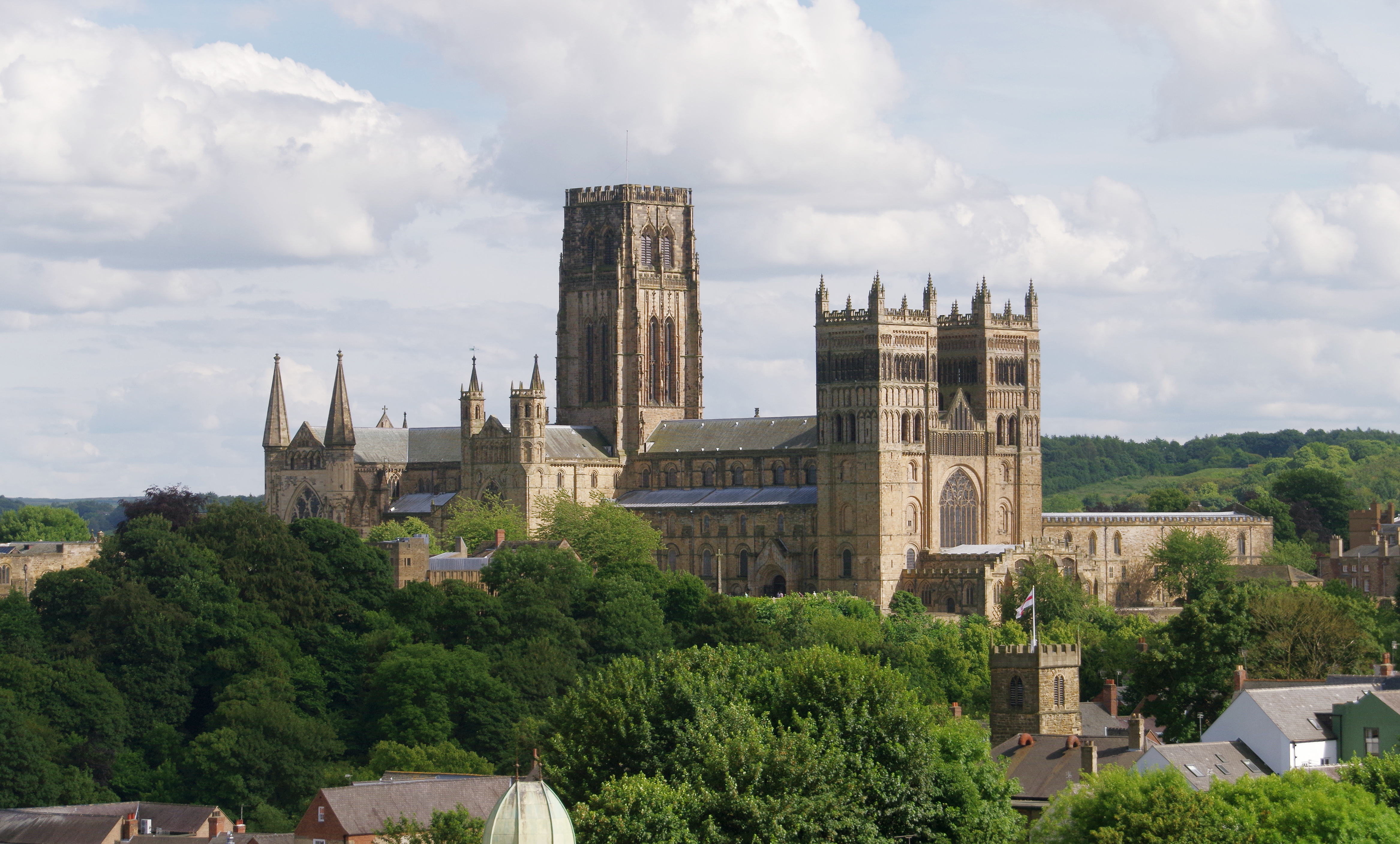
The most famous English example is the sanctuary ring on the north door of Durham Cathedral. It is exactly what you want from an object like this: heavy, watchful, beast-faced and faintly offended by your presence.
Durham already has the right atmosphere for this kind of story. The cathedral was built to guard the body of , and it still feels less like a polite church than a holy fortress above the River Wear. The sanctuary ring belongs to that mood completely. It gives the cathedral door a face, and not a welcoming one in the modern customer-service sense. More like: explain yourself quickly.
That is part of the power of it. A fugitive reaching Durham was not just knocking on any door. They were approaching one of the great sacred powerhouses of northern England, a place where saintly authority, cathedral privilege and political weight all pressed together. The ring is small compared with the building, but it tells a more human story than the stonework does. Someone running for their life does not have time to admire rib vaulting.
They need the door to open.
Adel: another monster at the threshold
Durham is the celebrity knocker, but it was not the only door ring with main-character energy. At St John the Baptist, Adel, near Leeds, the Norman south doorway had a 13th-century bronze sanctuary ring showing a monster swallowing a man. That is such a perfect image for sanctuary that it almost feels too on the nose: danger, teeth, threshold, one human body caught exactly where the door begins.
The original Adel ring was stolen in 2002 and replaced with a replica, which gives the object a strange second life. It still works visually as a sanctuary knocker — beast, mouth, ring, warning — but now it also carries the very modern indignity of heritage crime. The thing that once symbolised refuge had to be protected from people, too.


Adel helps make the point that sanctuary knockers were not just pretty hardware. They could be little threshold monsters: part handle, part warning, part legal signal, part carved panic button. If Durham feels like a cathedral door growling at you, Adel feels like the door is actually eating the situation.
What happened after someone claimed sanctuary?
This is where the story becomes more interesting than the simple “church saves criminal” version.
A person who claimed sanctuary might be protected for a limited time, but they could not necessarily stay forever. In many cases, the fugitive had to confess, place themselves under the sanctuary process and eventually choose between standing trial or abjure the realm. To abjure the realm meant swearing to leave the kingdom, usually by a specified route and within a set period, in exchange for avoiding ordinary legal punishment.
That is such a strange compromise. You live, but you disappear. The church door saves your body, but the law takes your home, your future, your place in the community. It is survival with a catch, which is often the most believable kind of survival history gives us.
There is something almost cinematic about the route out: the fugitive directed towards a port, expected to leave, watched by law and custom, neither free nor quite condemned. Sanctuary created a pause, but the pause had consequences.
saved by a door / ruined by the terms and conditions
The “peace chair” version
The door knocker gets the headline because it is dramatic, but sanctuary was not only a door-ring story. Some places preserved the idea through a , a stone seat associated with peace, refuge and protected status.
Beverley Minster is the famous example people often mention here. Its frith stool, also called a peace chair, connects sanctuary to sitting rather than knocking, which is much less action-film but arguably even stranger. Imagine being so desperate that a stone chair near a holy place becomes the object between you and death. It is not flashy. It is not beast-faced. It just sits there, doing an enormous amount of legal and spiritual work while looking like it would rather not be disturbed.
The chair version helps explain the bigger point: sanctuary was not only about one spectacular piece of door furniture. It was about recognised holy space. Rings, chairs, thresholds, boundaries and churches all gave shape to the same idea, that a sacred place could interrupt ordinary punishment and force the world to slow down.
Why churches had this power
To modern eyes, it is tempting to ask why a church had any legal force at all. But medieval life did not separate religion, law, community and authority into neat modern boxes. A major church was not just a place where people went on Sundays. It was an institution, landlord, archive, employer, shrine, courtly player, burial place, pilgrimage centre and moral theatre all at once.
If a person reached sanctuary, they were not simply hiding behind a priest’s cassock. They were entering a different zone of authority. The church could not abolish the law, but it could complicate the law’s arrival. That complication mattered in a violent society, especially when vengeance and justice could look very similar from a distance.
This is why sanctuary stories feel so alive. They are not only about criminals. They are about thresholds, fear and the hope that one building might be powerful enough to make everyone stop for a moment.
Sanctuary was mercy, but not softness
The word “sanctuary” sounds gentle now, almost spa-like if you say it carelessly, but medieval sanctuary had a harder edge. It was for people in danger, sometimes for people accused of serious crimes, and it belonged to a world where punishment could involve hanging, mutilation, exile, forfeiture or violent retaliation.
That does not make sanctuary sentimental. It makes it practical. It was a pressure valve in a society that knew blood-feud, local anger and public punishment. The church did not necessarily say: this person is good. It said: this person has reached a protected place, and that fact must be dealt with.
That is very different.
It is also why the sanctuary knocker makes such a good object. It is not pretty in the soft, devotional sense. It is strange, heavy and procedural. It does not promise comfort. It promises that the next thing to happen will not be quite as simple as the mob hoped.
The end of the old right
The old legal force of church sanctuary did not last forever. By the early modern period, the system was increasingly restricted and eventually overturned. In England, the laws permitting church sanctuary were abolished by Parliament in 1623.
After that, the knockers remained as objects, but the old terror around them drained away. A ring that had once signalled refuge became heritage, symbol, photograph, curiosity and search result. That is what happens to so many powerful things. They survive, but their job disappears.
Still, the object remembers. A sanctuary knocker is not just a gothic detail on a church door. It is a leftover from a society where the physical act of reaching a door could alter the next hours, days or years of a person’s life.
The ring made mercy solid
That is the strange power of the sanctuary knocker. It made an abstract protection into something a frightened person could touch. Not innocence, not escape, not a happy ending with a choir swelling in the background, but a pause with metal under the hand and a holy threshold at the back.
The medieval church was not just beautiful stone and stained glass. It was a place people used in extremis, when ordinary life had broken and the difference between outside and inside became everything.
The sanctuary knocker survives because it is odd and photogenic, but it mattered because it made protection tangible. You could not grab mercy in the abstract. You could, however, grab a ring.
And in the right century, in the right place, with the right law still standing behind it, that ring might have bought you enough time to stay alive.
Enjoyed this one?
Get the next story straight to your inbox. No filler, no spam — just the next place worth writing about.
No spam. Unsubscribe any time.
Sources+
- Wikipedia: Sanctuary knockeren.wikipedia.org
- Wikipedia: Durham Cathedralen.wikipedia.org
- Wikipedia: St John the Baptist Church, Adelen.wikipedia.org
- Wikimedia Commons: St John the Baptist Church, Adel, Leedscommons.wikimedia.org
- Wikipedia: Frithstoolen.wikipedia.org
- Wikipedia: Beverley Minsteren.wikipedia.org
- Wikipedia: Church asylumen.wikipedia.org
- Image credits: Wikimedia Commons images used — The Sanctuary knocker, Durham Cathedralcommons.wikimedia.org, Durham Cathedral from the north-westcommons.wikimedia.org, Adel Norman Door Ring, 1963commons.wikimedia.org, Adel reproduction knockercommons.wikimedia.org, Beverley Minster Exteriorcommons.wikimedia.org.
More articles
Swipe →

