Some ruins make you work for them.
Three buses. A road with no pavement. A “short walk” that turns into a small moral test. I love a dramatic old place, but I do not always want the car admin, the parking gamble, or the final mile where Google Maps starts behaving like it has a personal problem with me.
So this is not just a list of ruins that technically have a train station somewhere in the same county. This is a guide to UK ruins you can visit by train in a way that actually feels like a good idea: abbeys by train, castles by train, station walks, city loops, coastal climbs, castle towns and the occasional scenic faff that earns its place by being gorgeous.
The individual site pages can do the deeper history. Here, the question is more personal and more practical: what kind of day does the train give you? Do you step out and find old stone almost immediately? Do you walk through a city first? Does the journey become part of the atmosphere, or are you going to end up on the edge of a B-road reconsidering your choices?
Before you go, check opening times, train times, Sunday services and the route from the station. A ruin may be eternal, but the last train home is not.

York: the easy win
York is the starter ruin-by-train day because the city does not make you fight for the good bits.
From York station, St Mary’s Abbey is an easy walk — roughly ten minutes if you do not get seduced by the walls, the river, or the general Yorkness of everything. This is the kind of no-car history day where you can step off the train and build a whole loop without needing a transport spreadsheet.
St Mary’s Abbey gives you the ruined drama. The Museum Gardens make it feel half-wild and half-curated. Then you can pull in the city walls, Clifford’s Tower and York Minster without the day turning into a logistical punishment.
The lovely thing is the contrast. The abbey is broken. The walls are walkable. Clifford’s Tower is all height and violence. The Minster is the opposite of a ruin: medieval power still standing, still performing, still refusing to become casual.
Canterbury: pilgrim behaviour
Canterbury is less about one isolated ruin and more about moving through a city shaped by sacred travel.
Aim for Canterbury West or Canterbury East, then let St Augustine’s Abbey become part of a walkable city route rather than a platform-adjacent stop. Allow around 20 minutes on foot, depending on which station you use and how many medieval distractions you allow into your life.
This one works by train because walking is part of the mood. People came to Canterbury for centuries with sore feet, offerings, hopes, guilt, grief and religious expectations. You are not exactly doing a medieval because you bought an off-peak return and possibly a meal deal, but the city still makes more sense when you move through it on foot.
Start with the abbey ruins, then pull in Canterbury Cathedral, St Martin’s Church and Eastbridge Hospital if you want the fuller sacred route. The cathedral is not a ruin, obviously, but that is why it works. Ruins feel different when you place them beside buildings that survived, adapted and kept their role.
Canterbury is for when you want the train to drop you into a city that still understands arrival as an event.
Kirkstall: medieval Leeds, somehow
Kirkstall Abbey is proof that a ruin does not need a lonely valley to feel powerful.
Treat it as a Leeds rail day with an onward bus, taxi or local-station walk. It is not the purest “step off the train and there it is” option, but it is very doable if you plan the last leg instead of leaving your fate entirely to optimism.

The reward is scale. Kirkstall is not a token arch and a polite little plaque. It has height, shape and enough surviving fabric that you can still feel the plan: church, , , , routine.
What makes it good by train is the urban contrast. You come through Leeds, then suddenly there is this huge ruin beside grass, traffic, dog walkers and the River Aire. The city does not spoil it. It makes it stranger. The medieval world is not tucked away in a costume box somewhere. It is sitting in a park, politely outlasting everyone.
Gloucester: friars and fragments
Gloucester is for people who like their medieval ruins with pavements, coffee options and the faint thrill of realising half the city has been recycled from older holiness.
The station puts you close enough to the centre that Blackfriars, Greyfriars and Gloucester Cathedral can become one walk rather than three separate missions. That is the joy of it. You are not chasing one ruin across a field. You are letting a city reveal its religious leftovers.
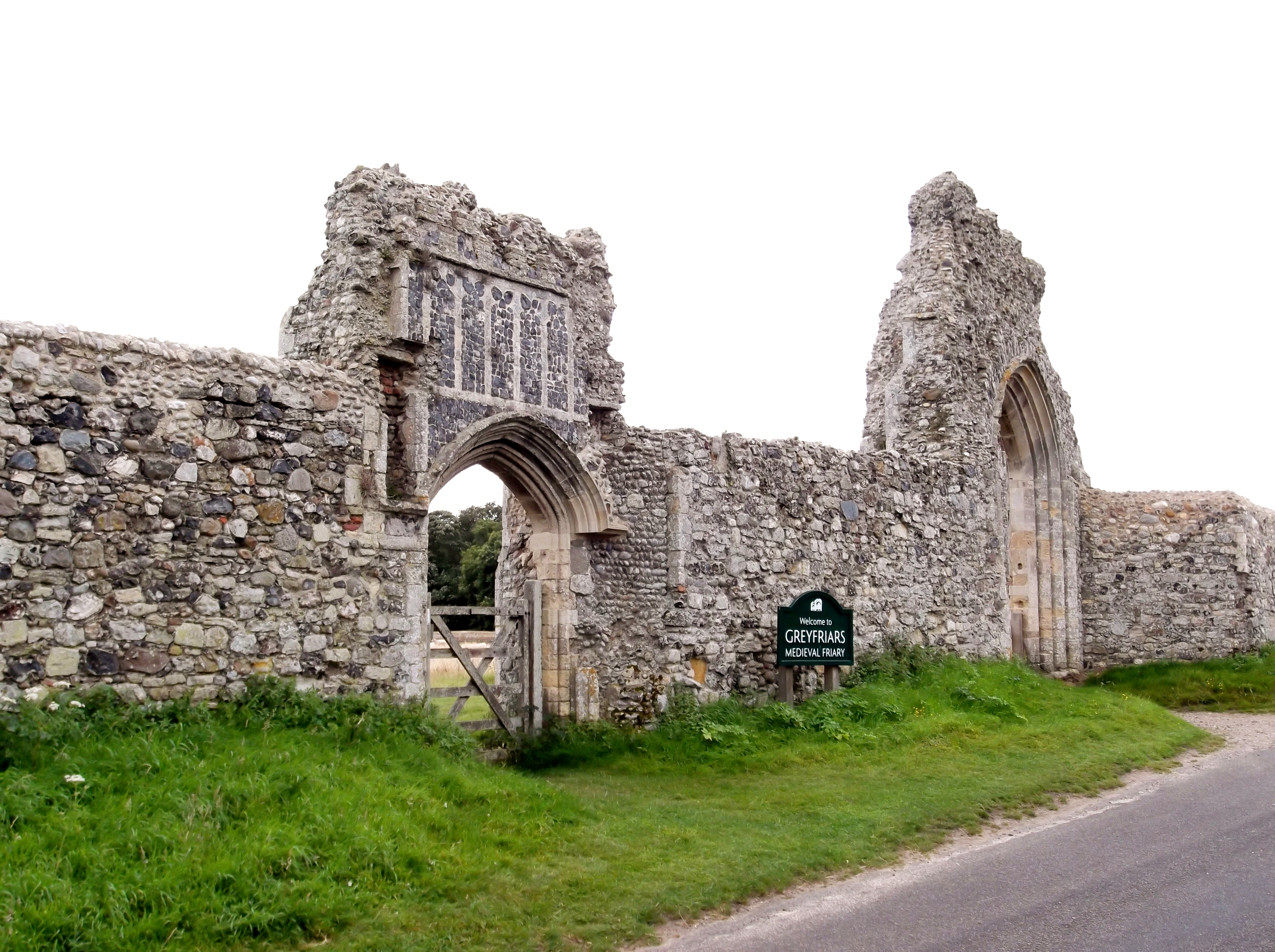
Blackfriars gives you one of the most complete surviving Dominican friaries in Britain. Greyfriars gives you the sharper, more broken feeling. The cathedral gives you the survival story, the grand stone answer to all the fragments around it.
It is also a good place to understand the difference between a and an abbey without turning the day into homework. Friars were more urban and outward-facing, tied to preaching and life among people. Abbeys were usually more enclosed monastic houses. Once you know that, Gloucester stops looking like a few old religious buildings and starts looking like a city where different medieval systems overlapped.
Manchester: Rome under the railway arches
Mamucium Roman Fort is not romantic in the abbey sense. It is urban, compact, reconstructed and surrounded by a city that has absolutely no intention of lowering its voice.
For Castlefield, Deansgate is the easiest rail arrival, with the remains only a short walk away. From Manchester Piccadilly or Oxford Road, it becomes more of a city wander, which is not a bad thing if you want the old layer to appear gradually through the modern one.
That is what earns it a place in a rail-friendly route. A Roman in Castlefield lets you do ancient history without disappearing into the countryside. You arrive by train, walk through modern Manchester, and find the Roman layer tucked under bridges, canals, warehouses and bars.
It is not the most complete Roman site in Britain, but it is a good reminder that ancient places do not always sit neatly in fields with sheep around them.
Sometimes they survive as a crease in the city.
Ludlow: arrive like a border ghost
Ludlow is one of those places where arriving by train feels right. You are not just going to a castle. You are arriving into a town that still understands it has a dramatic silhouette.
From Ludlow station, Ludlow Castle is a very manageable town walk, roughly 10–15 minutes for most people. If you want to add Stokesay Castle, treat it as a planned extra via Craven Arms, local transport or a longer walk rather than something you casually bolt on after lunch.
The main appeal is the Welsh Marches mood: borderland, market town, castle walls, old routes, hills, power, edges. Ludlow Castle feels like a real stronghold rather than a polite heritage prop. It sits there with the confidence of a ruin that knows it still controls the view.
Stokesay is the softer counterpoint: more fortified than brutal fortress, which makes it good for thinking about comfort, status and defence all at once.
Kenilworth: big castle energy
Kenilworth Castle is one of the best big castle ruins to visit by train in the Midlands, mostly because it is enormous in a way that feels slightly unreasonable.
From Kenilworth station, the castle is a proper walk, around 20–30 minutes depending on your route and pace. It is not difficult, but it is not “blink and you’re there” either, so wear shoes that understand the assignment.
The and later medieval castle, the , the great hall, the Leicester story, the Elizabethan garden, the slighted walls — it is power, romance, theatre and damage all piled into one place.
This is a good rail day because the walk gives you a sense of arrival. You do not just teleport into the site car park. You move through the town first, and then the ruin becomes the destination it deserves to be.
Some places are famous because everyone has been told to like them. Kenilworth is famous because it really does have big castle energy.
Whitby: the climb
Whitby Abbey is the theatrical one.
Whitby station gets you into town, then the abbey makes you earn it. Allow around 20–30 minutes on foot depending on your route, your pace and how dramatically you experience the 199 steps.
The climb is not just access. It is part of the whole performance: harbour below, churchyard above, abbey higher still, North Sea wind behaving like it has been hired for atmosphere.
Whitby has almost too much going on in the best way: origins, St Hilda, monastic history, Gothic ruin, Dracula atmosphere, coastal weather and a route up that feels like a small pilgrimage even if you only came for photographs.
Come for the abbey. Stay for the climb, the churchyard, the wind, and the sense that Whitby has been waiting all day to be dramatic at you.
The scenic faffs worth doing
Some ruins are absolutely worth doing by train, but they need a bit more patience than the easy city ones.
Corfe Castle is the scenic cheat. It works best as train plus onward connection, especially if you can fold in the Swanage Railway. A to a ruined castle is so offensively on-brand that it deserves a place here, but check the route before you commit.
Furness Abbey is the red ruin in a Cumbrian valley. The nearest station makes it possible without a car, but services and onward details need checking. Go for red sandstone, wooded-valley atmosphere and the feeling of a wealthy monastery after collapse.

Arbroath Abbey is much easier than it looks on paper: a rail town, sea air and a red-stone abbey tied to national myth. It is a good one if you want a Scottish ruin where the station, harbour and abbey can all sit inside the same day.

These are not the “I have two hours and no plan” options. They are the ones for when you want the journey to feel like part of the point.
Why trains suit old stones
There is something good about arriving at an old place without a car.
You approach more slowly. You walk through the town. You notice the station, the streets, the awkward modern bits, the signs, the food places, the ordinary life around the monument. The ruin does not appear as a destination bubble. It sits in the world.
That is why train days suit old stones so well. The point is not just collecting ruins like stamps; it is noticing how old places behave now: in parks, cities, churchyards, coast towns, market towns, commuter routes and places where someone is definitely just trying to walk their dog while you are having a mild emotional reaction to a broken arch.
The best ruins you can visit by train are not just convenient. They remind you that history was never separate from movement. walked. Monks travelled. Armies marched. Friars preached in towns. Railways came later and changed the map again.
So take the train. Bring snacks. Check the opening times. Leave time for the station walk. Wear shoes that can handle grass, cobbles and one bad decision.
The old stones are not as unreachable as they pretend to be.
Enjoyed this one?
Get the next story straight to your inbox. No filler, no spam — just the next place worth writing about.
No spam. Unsubscribe any time.
Sources+
- York Museum Gardensyorkmuseumgardens.org.uk
- Leeds Museums & Galleries: Visit Kirkstall Abbeymuseumsandgalleries.leeds.gov.uk
- English Heritage: St Augustine’s Abbey directionsenglish-heritage.org.uk
- English Heritage: Blackfriars, Gloucesterenglish-heritage.org.uk
- English Heritage: Greyfriars, Gloucesterenglish-heritage.org.uk
- English Heritage: Kenilworth Castleenglish-heritage.org.uk
- English Heritage: Whitby Abbeyenglish-heritage.org.uk
- English Heritage: Furness Abbeyenglish-heritage.org.uk
- Historic Environment Scotland: Arbroath Abbeyhistoricenvironment.scot
- Swanage Railwayswanagerailway.co.uk
- National Trust: Corfe Castlenationaltrust.org.uk
- Image credits: Wikimedia Commons images used — St Mary’s Abbey Yorkcommons.wikimedia.org, Kirkstall Abbey navecommons.wikimedia.org, Furness Abbeycommons.wikimedia.org, Arbroath Abbeycommons.wikimedia.org.
More articles
Swipe →