Chanctonbury Ring on the South Downs has the deeply unfair problem of being beautiful and sinister at the same time.
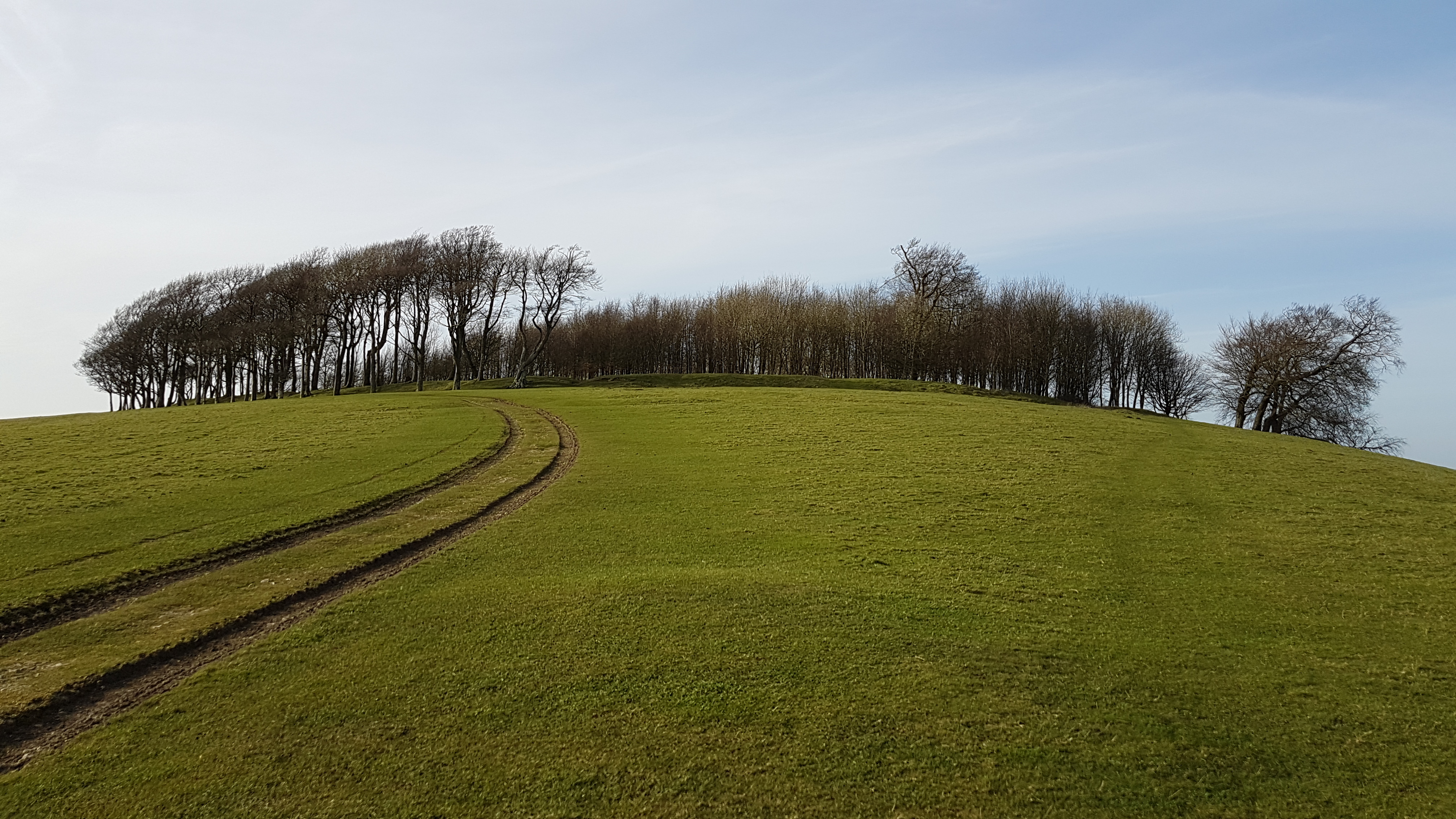
In daylight, it is all South Downs loveliness: hill, sky, sheep, walkers, big views, sensible boots. From a distance, the ring of trees looks almost too neat, like someone has drawn a symbol on the skyline and then refused to explain themselves.
Then someone tells you the rule.
Walk around the trees seven times anti-clockwise, and the Devil is supposed to appear.
Which is honestly rude, because now a perfectly wholesome walk has become a dare.

The hill was strange before the Devil got involved
The Devil story is the bit people remember, because of course it is. But it is not the oldest thing here. Beneath the trees is a prehistoric , probably late or early . Later, in the period, temples were built inside the enclosure.
That matters because folklore rarely lands on empty ground. Places do not usually become uncanny from nowhere. A high hill with old , wide views, buried temple traces and a clear boundary already has the right ingredients. The legend did not need to invent the charge of the place. It just gave people a rule for it.
And old places with rules always feel slightly dangerous.
The circle is doing the work
Circles are never fully innocent in folklore. Stone circles, fairy rings, churchyards, hillforts, tree clumps — once something forms a ring, it starts behaving like a boundary. Outside or inside. Safe or not quite safe. Watching or participating.
Chanctonbury has several circles layered together: the prehistoric enclosure, the beech ring, the path people walk, and the repeated instruction to go round and round until something answers.
That is why the story sticks. It turns movement into ritual. Most people go there for a view, but after you know the legend, the curve of the trees starts to look different. The hill gets terms and conditions.
Leave some things untested
I am not saying the Devil is waiting behind a tree with a bowl of soup, although some versions of the story make him weirdly hospitable. I am saying the legend changes the way the place behaves in your head.
That is enough.
Folklore does not need proof to work. It needs a landscape that feels like it could hold a warning. Chanctonbury has height, shape, age, trees, buried history and one very simple thing you are not supposed to do.
That is practically luxurious by folklore standards.
The hill leaves you with the dare
By the time you reach the top, the ring has already done half its work. It has sat on the skyline like a mark, pulled you up through the landscape, and turned a clump of trees into a boundary before the folklore even gets a chance to speak.
And yes, you will probably think about walking around it seven times. That is the cleverness of the legend: it does not need you to believe it completely. It only needs to plant the instruction in your head.
I think the story is better left untested. Some places are more powerful when the question stays open, when the trees stop being just trees, the circle stops being just a circle, and the path around it starts to look a little too much like an invitation.
Enjoyed this one?
Get the next story straight to your inbox. No filler, no spam — just the next place worth writing about.
No spam. Unsubscribe any time.
Sources+
- Wikipedia: Chanctonbury Ringen.wikipedia.org
- Wikipedia: Chanctonbury Hillen.wikipedia.org
- South Downs National Park: South Downs Waysouthdowns.gov.uk
- Image credits: Article images are credited to Wikimedia Commons where used and are under Creative Commons licences / public domain unless otherwise stated.
More articles
Swipe →