
Cerveteri’s Banditaccia Necropolis makes the word “” feel embarrassingly small.
A cemetery sounds like rows. Graves. A place where the dead are put once the living have finished the difficult part. Banditaccia is much stranger than that. It has roads, tomb fronts, chambers, mounds and whole areas that feel almost like neighbourhoods.
This is not just a burial ground. It is city planning for people who have already left the city.
That is the unsettling brilliance of it. The dead were not only removed. They were organised.
not graves / rooms
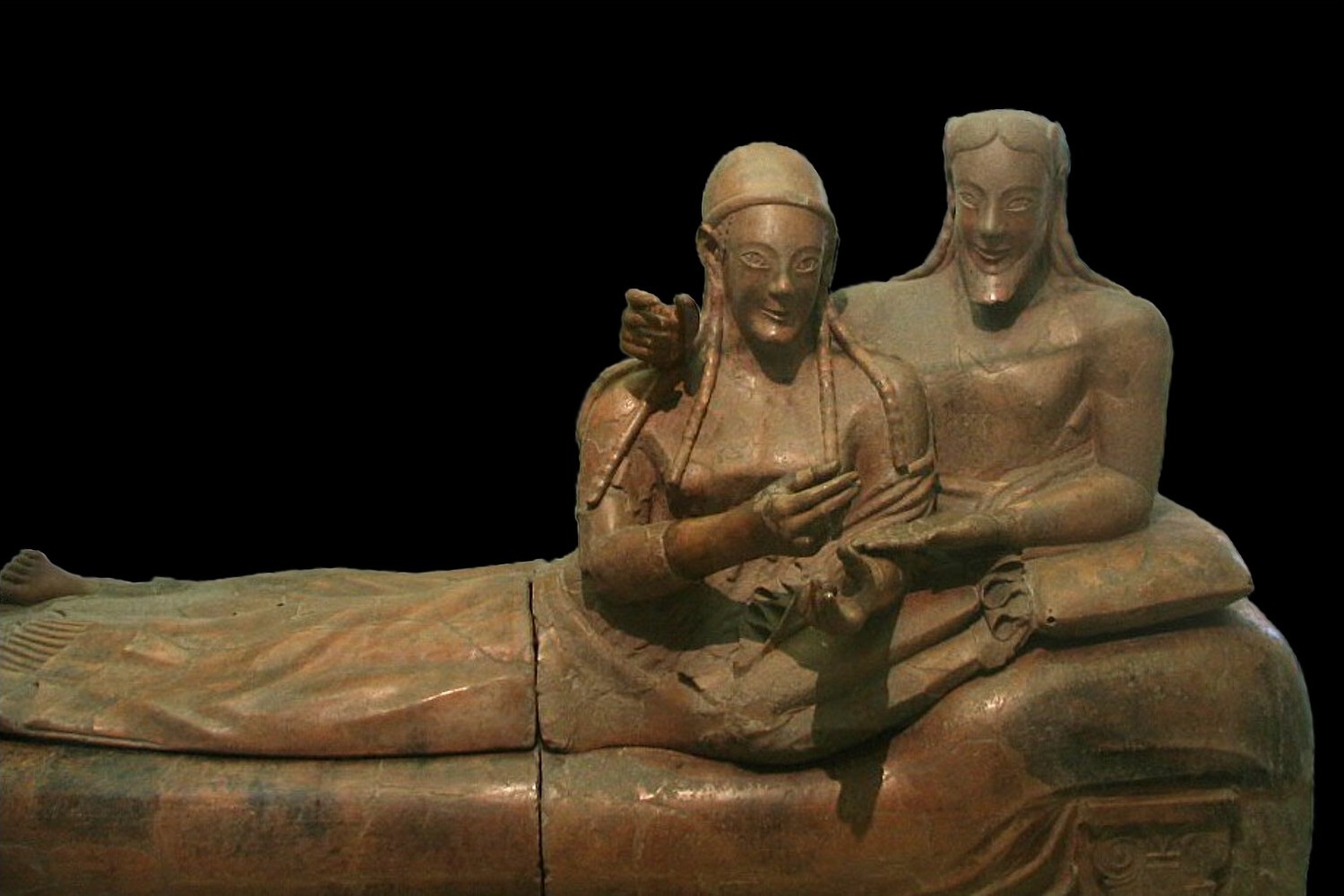
The streets make death feel domestic
The weirdness is not that there are tombs. Lots of ancient places have tombs. The weirdness is that the tombs sit in a landscape that feels designed to be walked like a . Some are rounded mounds. Some sit along routes. Many are cut into , the soft volcanic stone that let people carve whole interiors into the earth.
Once you notice the planning, the place changes. These are not just holes for bodies. They are addresses. Family spaces. Stone versions of households. A dead city beside the living one.
It is a very glamorous sort of eerie: roads for the dead, rooms under mounds, doors that lead not to houses but to absence.
The houses of the living survived through the dead
This is the part that makes Cerveteri so good. Etruscan domestic buildings have mostly disappeared, but tombs that copied domestic space survived in stone.
That feels backwards, but also very human. The dead ended up preserving the shape of the living.
Inside the tombs you can find carved beds, side chambers, roof forms, passages and rooms arranged with a logic that feels household-ish even when the purpose is funerary. It is not cosy exactly, but it is intimate. The tombs suggest that death was not imagined as a blank stop. It still needed structure. Space. Status. Family.
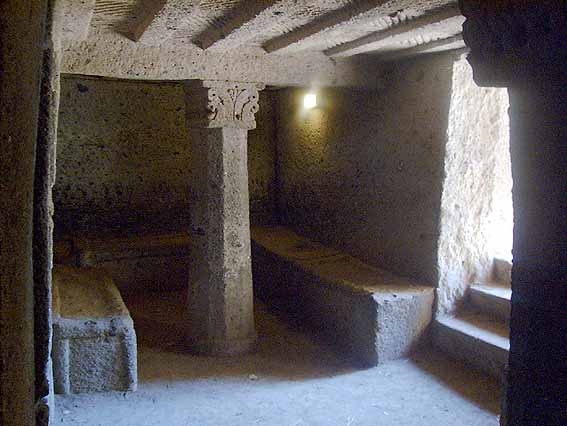
The Tomb of the Reliefs gives the game away
The Tomb of the Reliefs belonged to the Matuna family, and it is the one that makes the whole idea vivid. The walls are decorated with stucco reliefs of objects: tools, weapons, household things, animals, symbols of status and ordinary life turned into permanent decoration.
It is not just a tomb.
It is a room full of the things a life wanted to keep around it.

That is the line that stays with me. The dead were given thresholds, rooms, objects and family identity. The living built for them in a way that made death look strangely like home, as if the afterlife still required a layout.
The quiet city
Banditaccia does not need a ghost story. The plan is already strange enough. The roads make you behave like a visitor in a settlement, but the doors lead into tombs. The mounds look almost gentle from outside, but inside they are rooms for absence.
It is one of those places where the ancient world feels less like dates and more like an emotional system. How do you keep the dead near? How do you make family continue after bodies stop? How do you turn grief into architecture?
The answer at Cerveteri was not one grave.
It was a whole place.
The dead were given streets, and the living accidentally left us one of the clearest glimpses of Etruscan life by building for people who were no longer alive.
Enjoyed this one?
Get the next story straight to your inbox. No filler, no spam — just the next place worth writing about.
No spam. Unsubscribe any time.
Sources+
- UNESCO: Etruscan Necropolises of Cerveteri and Tarquiniawhc.unesco.org
- Wikipedia: Cerveterien.wikipedia.org
- Wikipedia: Tomb of the Reliefsen.wikipedia.org
- Image credits: Article images are credited to Wikimedia Commons where used and are under Creative Commons licences / public domain unless otherwise stated.
More articles
Swipe →

